NCAA, U.S. Amateur, U.S. Open: The Rare Three-Title Club Bryson DeChambeau Joined
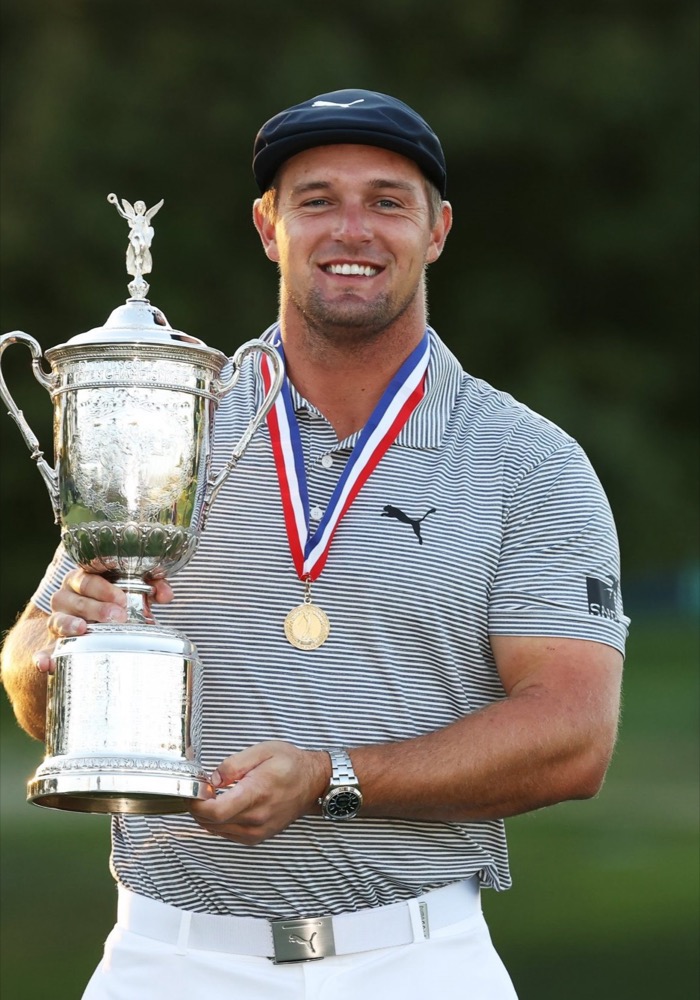
Picture a golf trophy shelf with three very specific spaces on it: one for the NCAA Division I individual championship, one for the U.S. Amateur, and one for the U.S. Open. Plenty of great players have filled one. Some have filled two. When Bryson DeChambeau won the U.S. Open at Winged Foot in 2020, he became only the third player to fill all three, after Jack Nicklaus and Tiger Woods.
If you have ever wondered why golf people talk about that list in a hushed voice, this guide walks through it: what each title is, the order Bryson won them in, and what makes the set so hard to complete. At the end there are a couple of ideas for the golf-history lover on your holiday list.
What makes each of the three titles hard to win?
They are three different tests, at three different stages of a career.
- The NCAA Division I individual championship is college golf's top individual prize. You can only play for it while you are on a college team, so the window is a few years at most.
- The U.S. Amateur is decided by match play, one opponent at a time, round after round. A single bad afternoon sends you home, which is why the final is such a grind to reach.
- The U.S. Open is a professional major, played on courses set up to punish every missed fairway. Under par is a good week; sometimes almost nobody gets there.
The first two have to be won before a player turns professional. The third can only be won against the best professionals in the world. That gap is the whole reason the list is short: a player has to peak as an amateur, then do it all again years later at the highest level.
How did Bryson DeChambeau win the first two in one year?
In 2015, while majoring in physics at Southern Methodist University, Bryson won the NCAA Division I individual championship by one stroke. A few months later he won the U.S. Amateur, beating Derek Bard 7 & 6 in the final. In match play, 7 & 6 means he was seven holes up with only six left to play, so the match ended early.
Winning both in the same year is its own small club. Bryson was the fifth player to do it, after Jack Nicklaus in 1961, Phil Mickelson in 1990, Tiger Woods in 1996 and Ryan Moore in 2004. Four names across more than five decades, then his.
He turned professional right after the 2016 Masters, and in July 2017 he won his first PGA Tour event, the John Deere Classic, by one stroke. You can read the rest of the background, from Modesto, California to the nickname "The Scientist", on the About page with Bryson DeChambeau's story.
What happened at Winged Foot in 2020?
The 2020 U.S. Open was the third space on the shelf. Bryson finished six under par and won by six strokes over Matthew Wolff. He was the only player in the field under par that week.
That result put him alongside Nicklaus and Woods as the only players to win the NCAA, the U.S. Amateur and the U.S. Open. Put simply: three titles, three stages of a career, and three names on the list.
Then, in 2024, he won the U.S. Open a second time, by one stroke over Rory McIlroy at six under, after getting up and down from a bunker on the 72nd hole. A second Open doesn't add a new space to the shelf, but it shows the first one was no one-off.
Why does the order of the wins matter?
Look at the dates side by side:
- 2015: NCAA individual title and U.S. Amateur, the same year.
- 2016: turns professional after the Masters.
- 2017: first PGA Tour win, the John Deere Classic.
- 2020: U.S. Open at Winged Foot, the third title of the set.
- 2024: a second U.S. Open.
The amateur titles came together, in one season. The professional major took five more years. That is the usual shape of the three-title story: the amateur peak is short and sharp, and the professional one has to be built again from scratch. Nine years separate the U.S. Amateur from the second U.S. Open, and the wins at each end are both by narrow margins, one stroke at the NCAA and one stroke in 2024, with the big margins (7 & 6, six strokes at Winged Foot) in between.
It is also why he is known as "The Scientist". All of his irons and wedges are cut to the same length, 37.5 inches, with the same lie and bounce, so only the loft changes from club to club. A player who rebuilds his bag around one measurement is a player who takes the long view, and the long view is exactly what a three-title career needs.
What would a golf-history lover wear?
If someone on your list can name every U.S. Open winner of the last decade, two designs suit them.
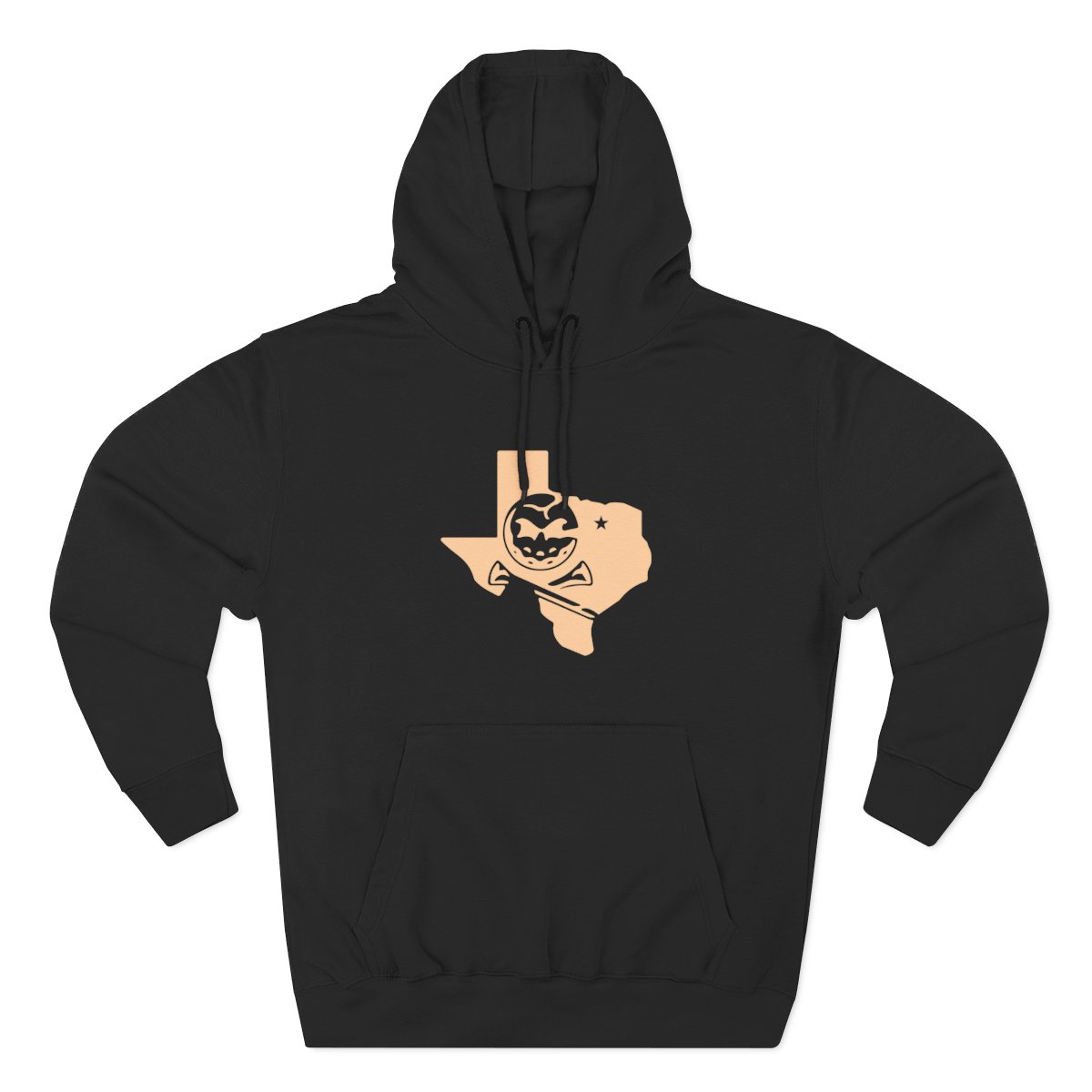
The Texas Skull is a peach Texas outline with a skull and crossed bones cut out of it, one bone shaped like a club shaft, and a single white star. It has no words on it at all, which makes it the quiet pick for someone who would rather the design speak for itself. On a cold morning at the course, the Texas Skull three-panel fleece hoodie is the warm way to wear it.
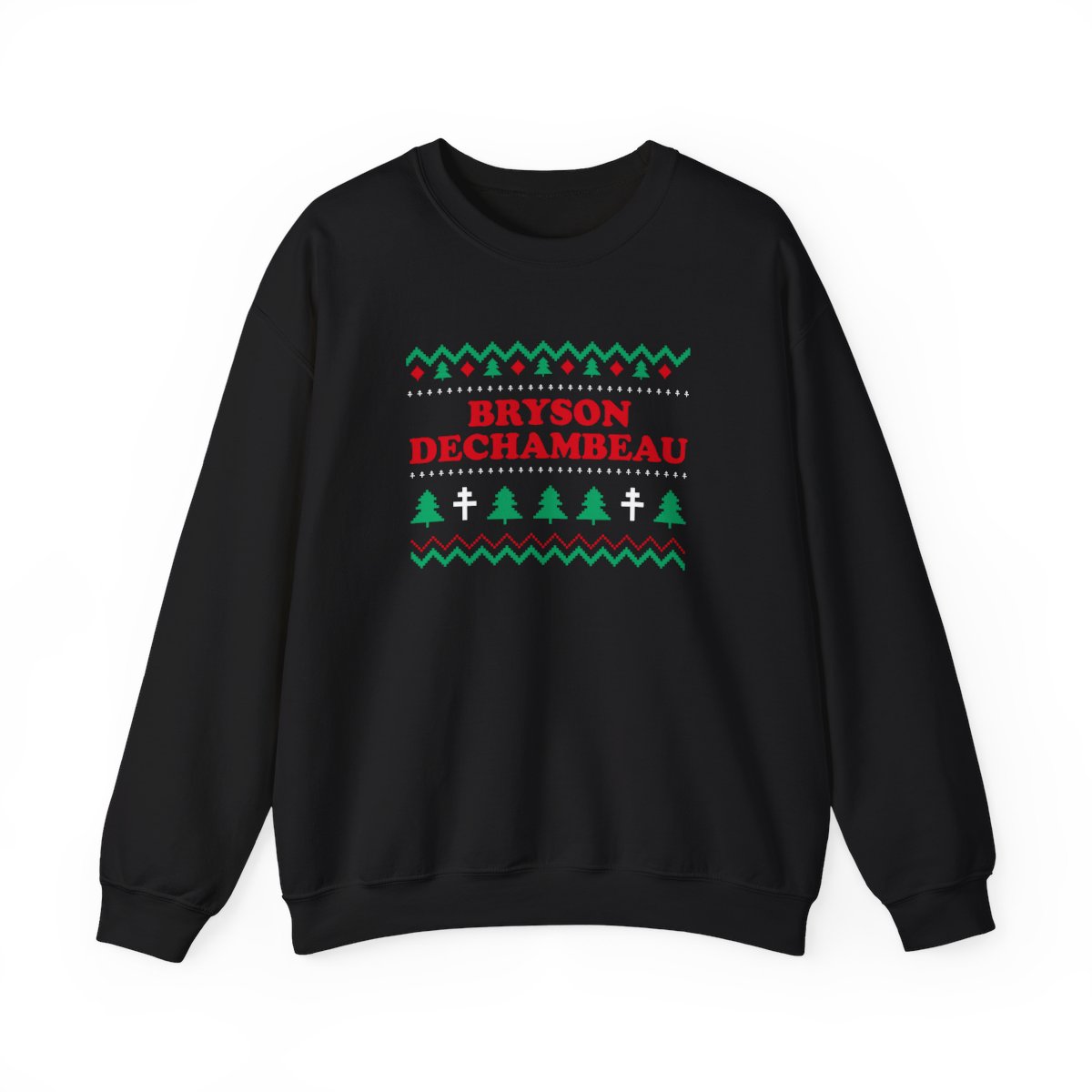
The Christmas Sweater design is the seasonal one: BRYSON DECHAMBEAU in red letters between pixel Christmas trees and knit-style zigzags, with gift boxes across the back. It makes an easy holiday gift, and the Christmas Sweater crewneck sweatshirt is the one to wear to a December watch party or a family dinner.
Both designs also come on kids' tees and youth hoodies, so a younger golfer can wear the same piece as the grown-up who tells them about 1961, 1996 and 2020. Every product page has its own size chart, so check it before you pick a size.
Three titles, three names, and a shelf very few players ever fill. Whichever design you choose, it's a nod to one of the rarest runs in the game.